Granite Surface Plate Supplier
for CMM & Metrology
Get matched with verified granite surface plate suppliers by size, accuracy grade, flatness and surface finish. For CMM bases, metrology labs, optical inspection and precision assembly.
Matching advice within 1 business day · No upfront matching fee
Submit Your Granite Surface Plate Requirements
No complete drawing needed. Leave your contact details and a brief description. We'll get back to you within one business day.
What Is a Granite Surface Plate?
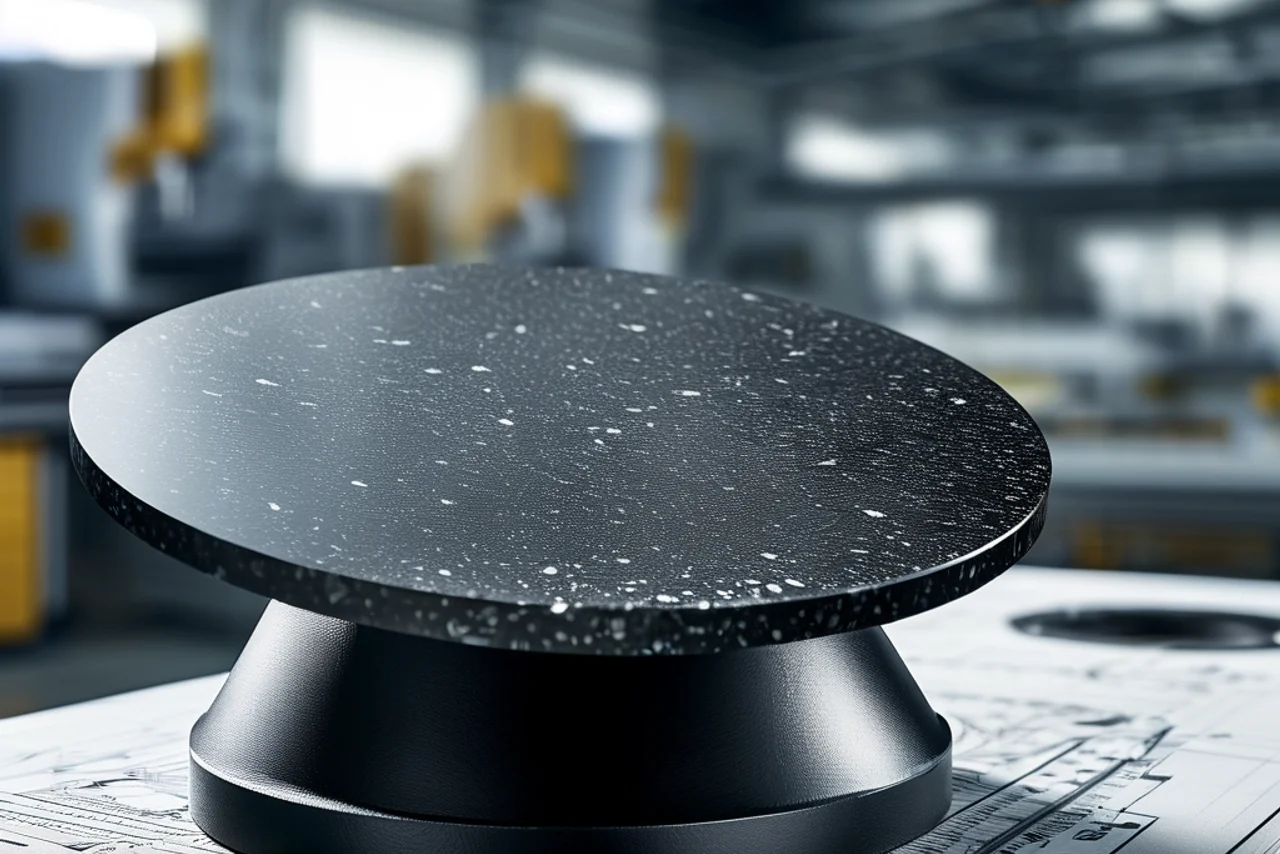
A granite surface plate is a precision flat reference made from natural granite, cut, ground and lapped to tight flatness tolerances. It is the foundation of accurate measurement and assembly work.
- Material advantages Granite is hard, wear-resistant, non-magnetic and corrosion-free. Its low thermal expansion makes it ideal for metrology rooms and climate-sensitive inspection setups.
- Common applications CMM bases, vision measurement tables, laboratory inspection plates, precision assembly benches and machine auxiliary tables.
- Grade drives the use case Grade 000, 00, 0 and 1 define different flatness bands. Choosing the right grade depends on inspection standards, part tolerance and environment control.
Common Specifications & Tolerances
Different sizes and grades demand different supplier capabilities in equipment, floor space and inspection.
How to Evaluate a Granite Surface Plate Supplier
Not every granite shop can consistently hold the flatness and finish that precision equipment demands. Focus on these capabilities.
Lapping & Flatness Control
Can they repeatedly hit the target grade? This depends on lapping equipment, abrasive selection and in-process flatness checks.
Size Coverage
Small plates and large plates require different floor space, cranes and inspection setups. Confirm the supplier's real upper limit.
Inspection & Calibration
Do they own laser interferometers and electronic levels? Can they issue third-party or ISO 17025 calibration certificates?
Material Stability
Are they using stable black granite grades? Has the material undergone sufficient natural and thermal aging?
Industry Experience
Have they supplied CMM, optical inspection or semiconductor customers? Each industry has its own quality language.
Batch Consistency
From first article to production runs, flatness and roughness should stay within a narrow band.
Typical Granite Surface Plate Machining Challenges
Understanding the hard parts helps you judge whether a supplier truly has the capability.
Flatness on Large Plates
The larger the plate, the harder it is to maintain uniform pressure and temperature during lapping. Equipment and room conditions matter.
Long-Term Stability
If internal stress is not released, the plate can move over time and compromise the accuracy of the machine mounted on it.
Temperature-Controlled Inspection
Grade 000 and 00 flatness checks must be done in a controlled environment. Many small shops lack this.
Surface Finish Control
Optical and semiconductor applications need very fine, consistent surface roughness. Abrasive grade and process discipline are critical.
Match Granite Surface Plate Suppliers by Size and Grade
AccuStone does not publish a supplier directory. Based on your platform size, accuracy grade, inspection requirements and application, we identify 2-3 verified suppliers that can actually do the work.
Ready to recommend to end customers. Full capability for high precision, large sizes and complete inspection.
Good fit for general precision plates and batch work with solid value.
Suitable for rough machining, pre-processing or suppliers being upgraded.
We do not promise "the best supplier." We match the supplier best suited to your current size, grade and batch requirements.
When Buyers Come to AccuStone
These are common situations where finding the right surface plate supplier becomes critical.
CMM Base Plate Prototyping
You need 1–2 high-precision plates for a new CMM. Flatness and stability are non-negotiable.
Metrology Lab Batch Purchase
You need many plates of the same grade. Consistency and report quality become the deciding factors.
Large Inspection Table
Size exceeds 2000 mm. You need to evaluate lapping capacity, crane access, packaging and transport.
Granite Surface Plate FAQ
Questions buyers often ask before sourcing a granite surface plate.
What is the difference between Grade 00 and Grade 000?
Grade 000 is the tightest tolerance. It is used for master reference work and high-end metrology labs. Grade 00 is the workhorse grade for CMMs and production inspection.
What flatness and roughness does a CMM surface plate need?
Most CMMs use Grade 00 with flatness in the low-micron range and surface roughness Ra ≤ 0.4 μm. The exact value depends on CMM accuracy class and part tolerances.
Should I choose Jinan Qing or Indian black granite?
Both are excellent black granites. Jinan Qing is widely used in China for high-stability plates. Indian black is dense and hard, often preferred for large or heavily loaded plates. The right choice depends on grade, size and budget.
How do I verify a flatness report?
Check that the report states the grade, measuring points, environmental conditions and traceability. Reports from ISO 17025 or national metrology labs carry the highest confidence.
How do I read a granite surface plate inspection report?
The report should state the accuracy grade, measuring point layout, environmental temperature and metrological traceability. Ask for reports traceable to ISO 17025 or national metrology labs, and confirm the measured area covers the full working surface.
What makes large granite surface plates harder to manufacture?
Larger plates are more sensitive to uneven lapping pressure and temperature gradients. They also need bigger inspection equipment, cranes and transport packaging. Above 2000 mm, supplier experience in large-format lapping and handling becomes critical.
Need a Granite Surface Plate?
Tell us the size, grade, application and lead time. We'll match you with granite surface plate suppliers that have the right equipment and experience.
Matching advice within 1 business day · Drawing info confidential