Semiconductor Granite Base Supplier Matching
Match verified suppliers for semiconductor granite bases, air-bearing platforms and vibration-isolation structures. Screened for Grade 000/00 accuracy, material stability and cleanliness.
Matching advice within 1 business day · No upfront matching fee
Submit Semiconductor Equipment Base Demand
No complete drawing required. Tell us equipment type, base size and accuracy requirements.
Why Do Semiconductor Machines Need Granite Bases and Components?
Semiconductor front-end, back-end and inspection equipment have extremely demanding requirements for micro-vibration, thermal stability and cleanliness. Granite bases, air-bearing platforms and marble vibration-isolation tables are widely used in lithography, inspection, bonding and die-attach equipment because of their excellent damping, low thermal expansion and chemical inertness.
Semiconductor equipment granite bases must not only support the machine's weight, but also provide a stable geometric reference for the motion system and cooperate with air-bearing guides, linear motors or hydrostatic guides to achieve nanometer-level positioning. Typical requirements include:
- High damping and low vibration transmission to suppress internal and environmental micro-vibration
- Excellent thermal stability to reduce deformation caused by temperature fluctuations
- High flatness and low surface roughness to meet air-bearing guide mating requirements
- Clean, non-magnetic, non-rusting material suitable for cleanroom environments
For semiconductor equipment builders, material stability, machining accuracy and long-term dimensional retention of the base directly affect machine yield and stability.
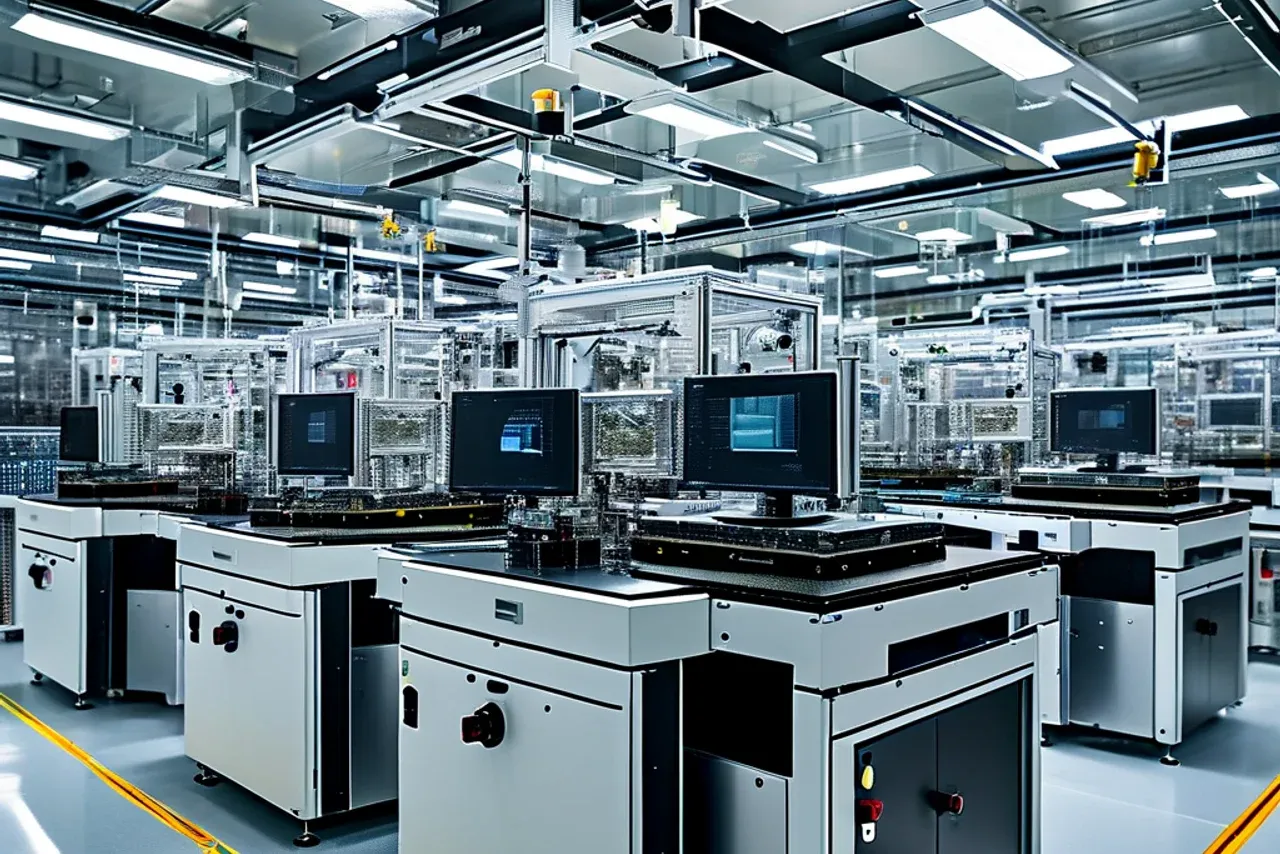
Common parameter requirements for semiconductor granite components
Requirements vary significantly by machine type and accuracy grade.
| Dimension | Requirement | Note |
|---|---|---|
| Common components | Machine base, air-bearing platform, motion stage, vibration-isolation structure | Air-bearing platforms demand extreme flatness and roughness |
| Accuracy grade | Grade 000, Grade 00 | High-end wafer inspection systems often use Grade 000 |
| Flatness | ≤1–3 μm (locally even tighter) | Must be inspected in a temperature-controlled environment |
| Surface roughness | Ra ≤ 0.2 μm | Air-bearing mating surfaces require a smooth finish |
| Material | Black granite (Jinan Qing, Indian black), density ≥2.65 g/cm³ | Material must be traceable with uniform internal structure |
| Inspection | Temperature-controlled inspection, laser interferometer, third-party calibration, material report | Recommend 20±1°C or tighter environment |
Supplier screening priorities for semiconductor equipment
AccuStone evaluates suppliers against these criteria to confirm real semiconductor industry capability.
Semiconductor industry experience
Have they served wafer inspection and semiconductor metrology customers, and do they understand cleanliness and stability requirements?
Ultra-high precision lapping
Can they consistently produce Grade 000 components with surface roughness down to Ra ≤0.2 μm?
Temperature-controlled inspection
Do they have a 20±1°C or tighter inspection room for sub-micron verification?
Material traceability
Can they provide material source, density, water absorption, and internal-structure documentation?
Air-bearing platform capability
Can they machine air-bearing holes and lap the mating surfaces to the required flatness and finish?
Long-term stability validation
Do they use natural aging plus thermal aging, and can they supply long-term dimensional stability data?
Typical machining challenges for semiconductor components
Understanding these challenges helps you plan lead times and acceptance criteria.
Sub-micron flatness
Grade 000 flatness demands precise lapping, a stable inspection environment, and experienced operators.
Air-bearing holes and mating surfaces
Hole diameter, position, depth, and mating-surface roughness directly affect air-bearing performance.
Internal material stress
Semiconductor equipment runs for years. Residual stress that is not fully released can cause slow deformation.
Clean machining environment
Some applications require particle control during machining, handling, and packaging.
Match Granite Base & Air-Bearing Platform Suppliers for Semiconductor
Based on equipment type, base size, air-bearing rail mating requirements and cleanliness needs, we identify 2-3 verified suppliers with proven semiconductor equipment experience.
We do not promise "the best supplier." We match the supplier best suited to your current equipment type, base size and cleanliness requirements.
Common misconceptions
These assumptions often lead to rework or long-term accuracy issues in semiconductor granite component sourcing.
Any granite grade works for semiconductor
Semiconductor applications need specific black granite with low thermal expansion, uniform grain, and verified stability. Not all granite meets Grade 000/00 or clean-room expectations.
Flatness is the only metric that matters
Surface roughness, air-bearing hole geometry, material traceability, and long-term stability are equally critical for wafer inspection and motion platforms.
Overseas suppliers always outperform domestic ones
A growing number of Chinese suppliers have semiconductor-grade capability and shorter lead times. The key is verifying their real process controls, not just their location.
Common sourcing scenarios
These are the moments when semiconductor equipment manufacturers usually re-evaluate suppliers.
Wafer inspection system development
You need a Grade 000 ultra-precision base where material stability and temperature-controlled inspection are critical.
Custom air-bearing motion platform
You need air-bearing hole machining and high-flatness mating surfaces, so the supplier must have air-bearing platform experience.
Domestic substitution supply chain
You need stable, traceable suppliers with long-term consistency and scalable capacity.
High-end equipment upgrade
You are shifting from imported bases to qualified domestic alternatives and need step-by-step supplier validation.
Semiconductor Granite Base FAQs
Common questions about accuracy, materials, air-bearing platforms and stability validation.
Why do semiconductor machines prefer granite bases?
Granite offers high damping, low thermal expansion, non-magnetic properties and chemical inertness. It effectively isolates micro-vibration, reduces thermal deformation, and does not produce rust particles in cleanrooms, making it ideal for lithography, inspection, bonding and die-attach equipment.
How is a semiconductor equipment granite base different from a general machine tool bed?
Semiconductor bases typically require higher flatness, lower air-bearing rail mating-surface roughness, and stricter material stability and cleanliness control. Some bases also integrate air bearings, thermal control or vibration isolation structures.
What matters in material selection for semiconductor bases?
High-density black granites such as Jinan Qing or Indian black are commonly used. Requirements include low water absorption, uniform internal structure, and sufficient natural and artificial aging to ensure long-term dimensional stability.
What is hardest to control when machining semiconductor granite bases?
The biggest challenges are flatness of large bases, roughness of air-bearing rail mating surfaces, and stress release during machining and shipping. Temperature-controlled inspection and proper support/packaging are critical to maintaining accuracy.
Why do semiconductor machines prefer granite bases?
Granite offers low thermal expansion, excellent vibration damping and non-magnetic properties, providing a stable reference for sub-micron wafer inspection and metrology equipment.
What accuracy is usually required for a semiconductor granite base?
High-end wafer inspection systems often require Grade 000 flatness, with local flatness down to ≤1 μm on air-bearing surfaces. General semiconductor metrology equipment commonly uses Grade 00.
What is the difference between an air-bearing platform and a standard granite plate?
Air-bearing platforms need precision air-bearing holes and mating surfaces for non-contact motion, requiring tighter flatness, roughness and hole-position tolerances than static reference plates.
Should I choose Jinan Qing or Indian black granite?
Both are premium black granites. Jinan Qing is widely used in China for high-stability bases. Indian black is denser and harder, often preferred for large or heavily loaded platforms.
Why is temperature-controlled inspection important?
Grade 000/00 flatness is measured in microns or sub-microns. Temperature fluctuations significantly affect results. Inspection at 20±1°C or tighter is recommended, and the supplier should provide temperature records.
How do I verify long-term stability?
Ask for natural and thermal aging records, plus dimensional tracking data from the same batch or historical parts. For critical equipment, set up a periodic re-inspection plan after first-article acceptance.
Need granite components for semiconductor equipment?
Tell us your machine type, accuracy grade, component type, and volume. We'll match you with granite component suppliers experienced in semiconductor equipment.
Matching advice within 1 business day · Drawing info confidential