CMM Granite Base, Bridge & Guide Rail Suppliers
Match granite component suppliers for coordinate measuring machines by flatness, parallelism, perpendicularity and Grade 00/000 capability.
Matching advice within 1 business day · No upfront matching fee
Submit CMM Granite Component Demand
No complete drawing required. Tell us the component type and basic accuracy requirements.
Why Do CMMs Need Granite Components?
Coordinate Measuring Machines (CMMs) operate at sub-micron to micron-level accuracy. The base, bridge, column and guide rails are not only load-bearing structures, but also the geometric reference of the entire measuring system. Granite's low thermal expansion, high vibration damping and long-term dimensional stability make it the preferred material for CMM granite components.
Different CMM types have different requirements: bridge CMMs emphasize flatness and rigidity of the base and bridge; gantry CMMs must also manage straightness and self-weight deflection of extra-long bridges; shop-floor CMMs focus more on environmental adaptability and batch consistency. Machine accuracy largely depends on:
- Flatness and stability of the base platform
- Geometric accuracy and self-weight deflection control of bridge and column
- Grinding quality of the guide rail / air-bearing guide mating surface
- Adequate long-term stress relief and aging treatment of the material
Choosing the wrong CMM component supplier often leads not to "slightly lower accuracy," but to first-article qualification followed by batch-to-batch drift, or straightness out of tolerance on large bridges that forces repeated rework. Finding the right partner matters more than finding the lowest price.
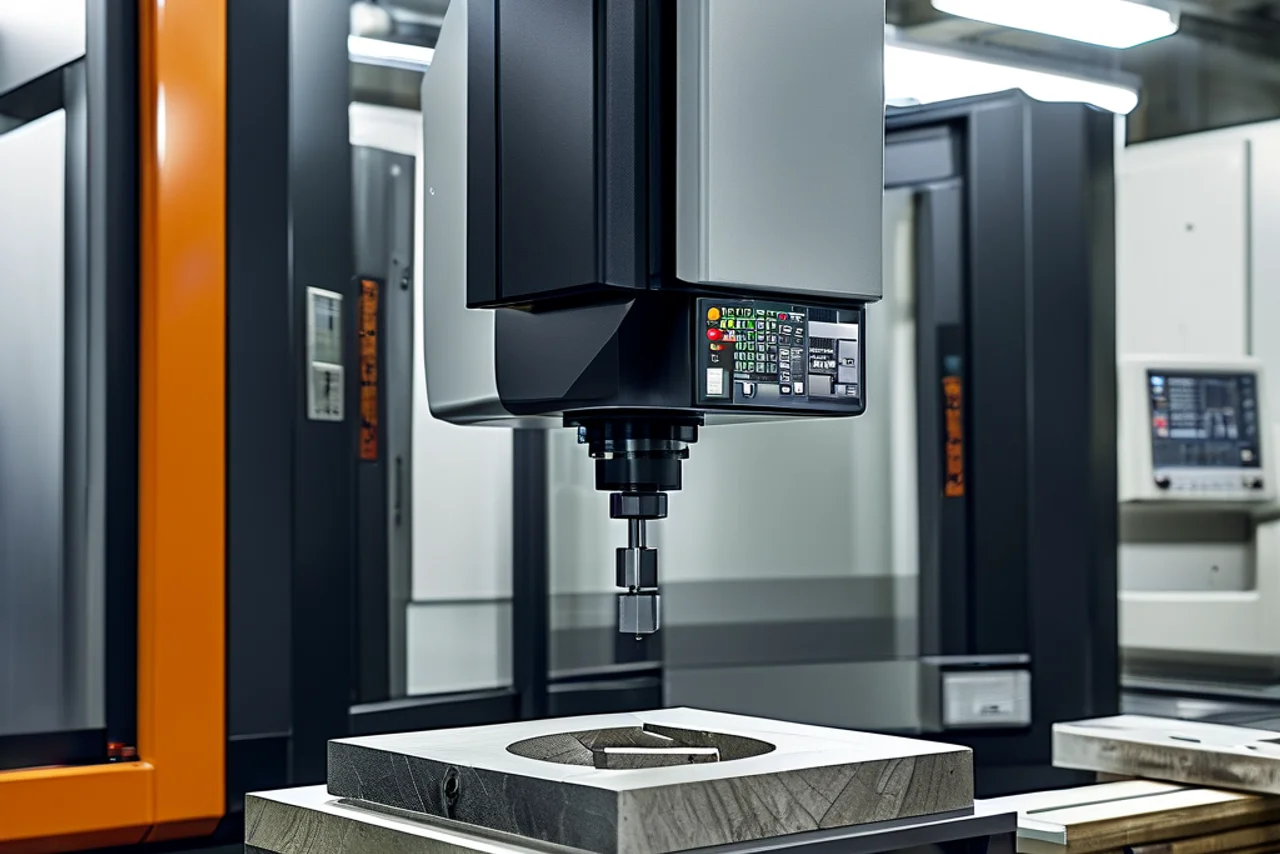
Typical Specification Requirements for CMM Granite Components
Requirements vary significantly by machine type and accuracy grade.
| Dimension | General Industrial Components | CMM-Grade Components | Note |
|---|---|---|---|
| Common components | Plates, bases | Bases, bridges, columns, rails, worktables | Bridge/gantry CMMs mainly use bases and bridges |
| Accuracy grade | Grade 0, Grade 1 | Grade 000, Grade 00 | High-precision CMMs commonly use Grade 000/00 |
| Flatness | 10–30 μm | 2–10 μm | High-precision models require ≤3 μm/m² |
| Parallelism / perpendicularity | ≤10–20 μm | ≤3–8 μm | Affects probe-path accuracy |
| Surface roughness | Ra ≤ 0.8 μm | Ra ≤ 0.2–0.4 μm | Air-bearing rail mating surfaces need even better |
| Inspection conditions | Standard shop floor | 20±1°C temperature control, laser interferometer / electronic level | Traceable calibration certificate recommended |
How We Screen CMM Granite Component Suppliers
AccuStone checks these dimensions to confirm a supplier truly understands CMM applications.
CMM Industry Experience
Have they served bridge-type or gantry CMM builders? Can they interpret the fit relationships and assembly datums of bases, bridges and columns?
High-Precision Lapping Consistency
Can they repeatedly produce Grade 00 or Grade 000 components? This depends on lapping equipment, process control and operator experience.
Inspection & Calibration Capability
Are laser interferometers and electronic levels available? Can they provide traceable calibration reports?
Material & Aging Process
Do they use stable black granites such as Jinan Qing or Indian black, with sufficient natural and artificial stress-relief aging?
Batch Consistency Control
From prototype to volume production, are flatness, hole accuracy and threaded-hole positional tolerance stable across batches?
Large-Size & Gantry Capacity
Large gantry CMMs need extra-long bridges and large bases. We evaluate the supplier's maximum size limit and inspection capacity.
Typical Machining Challenges for CMM Components
Understanding these challenges helps set realistic lead times and acceptance criteria.
Long-Term Accuracy Retention
CMMs must maintain sub-micron accuracy for years. If internal stress is not fully relieved, the component can slowly deform and drift.
Temperature Compensation Integration
Some high-end CMMs embed temperature sensors in the granite. Material stability and machining accuracy must both be met, with precise sensor-hole positioning.
Bridge Straightness & Self-Weight Deflection
Long bridges deflect under their own weight in free state. Proper support, lifting and inspection methods are essential.
Air-Bearing Rail Mating Surfaces
Air-bearing rails demand extremely high flatness and low surface roughness. Local defects directly affect air-bearing performance.
Match Granite Component Suppliers for CMM Builders
Based on machine type (bridge / gantry / shop-floor), accuracy grade, component type and batch size, we identify 2-3 verified suppliers with proven CMM component experience.
We do not promise "the best supplier." We match the supplier best suited to your current machine type, accuracy grade and batch requirements.
Common Misconceptions
These judgment biases often lead to rework or long-term accuracy issues in CMM granite component sourcing.
Looking Only at Price
Maintaining CMM-grade accuracy requires process know-how. A low quote often means fewer lapping passes or inadequate inspection conditions.
Looking Only at Equipment
Owning high-precision lapping machines does not guarantee consistent high-precision output. Operator experience and inspection discipline matter just as much.
Ignoring Stress-Relief Aging
A granite component can pass inspection on delivery but slowly deform six months later if it has not undergone adequate aging.
Confusing Accuracy Grades
Not every CMM needs Grade 000, but Grade 0 is not enough for every machine either. The grade must match the machine's actual accuracy requirement.
Common Sourcing Scenarios
CMM builders often reassess suppliers in these situations.
Bridge-Type CMM Prototype Development
Need 1–2 high-accuracy CMM granite base, bridge and column prototype sets quickly, with a supplier willing to support small-batch trial runs.
CMM Volume Production Sourcing
Batch coordinate measuring machine production needs stable delivery of CMM granite components. Focus on consistency, lead-time control and supply-chain resilience.
Large Gantry CMM Bridge Machining
Oversized CMM bridges and bases require evaluation of the CMM bridge manufacturer's maximum machining size, aging capacity and inspection limits.
Building a Second-Source Supply Chain
Need a qualified backup CMM granite component supplier with available capacity to reduce disruption risk and improve negotiation position.
Current Supplier Lead Time Too Long
Find a CMM granite component manufacturer with open capacity fast to keep your production schedule on track.
Common Questions About CMM Granite Components
Answers to typical questions about sourcing, machining and acceptance of CMM granite bases, bridges and platforms.
What granite components does a CMM need?
Common CMM granite components include the base platform, bridge, column, guide rails and air-bearing rail mating surfaces. The base and bridge are the primary geometric references and have the strictest requirements for flatness, straightness and long-term stability.
How is a CMM granite supplier different from a general granite shop?
A general granite shop may be able to lap plates, but may not understand CMM assembly datums, hole accuracy or batch consistency. A qualified CMM supplier typically owns laser interferometers and electronic levels, and can deliver traceable inspection reports under temperature-controlled conditions.
What is the difference between bridge-type and gantry CMM component requirements?
Bridge CMMs emphasize base and bridge flatness, parallelism and rigidity. Gantry CMMs also require strict straightness and self-weight deflection control for long bridges, demanding larger-size machining, lifting and inspection capability.
How do I choose a supplier for a large gantry CMM bridge?
Confirm the supplier's maximum machinable size, stress-relief process for extra-long components, temperature-controlled inspection capability, and shipping packaging. A site visit to review past gantry CMM bridge cases and inspection reports is recommended.
Which accuracy grade is right for my CMM?
Grade 000 offers the highest accuracy and is used for high-end metrology CMMs or master references. Grade 00 is widely used in production CMMs. The correct grade depends on the CMM accuracy specification and the tolerance of the parts being measured.
How can batch orders maintain consistent accuracy?
Consistency depends on process stability, inspection discipline and material batch uniformity. Establish acceptance criteria, require full-dimension or sampling inspection reports, and run a small pilot batch before volume production.
Need Granite Components for Your CMM?
Tell us your machine type, accuracy grade, component type and batch size. We will match you with granite component suppliers that have proven CMM experience.
Matching advice within 1 business day · Drawing info confidential